
About Us
Ashrams
Pakistan
Sant Satguru
Events
Satguru Warsi Utsavs
Satguru Janam Utsavs
Special Ashram Observances
Dharmic Festivals
Pakistan
Satguru Warsi Utsavs
Satguru Janam Utsavs
Special Ashram Observances
Dharmic Festivals
The First Light (1733–1853)
Satguru Sri Har Bhajan ki paad padam parnaam,
Jiyan kirpa te vighan nasay, pooran hoowan kaam
SatGuru Baba Har Bhajan Sahib renounced worldly life at a young age and settled in Shikarpur, Sindh. Known for his compassion, service, and meditation, he drew followers from all communities. His divine blessings, teachings of oneness, and the establishment of Samadha Ashram continue to inspire devotees even after his miraculous departure in 1853.
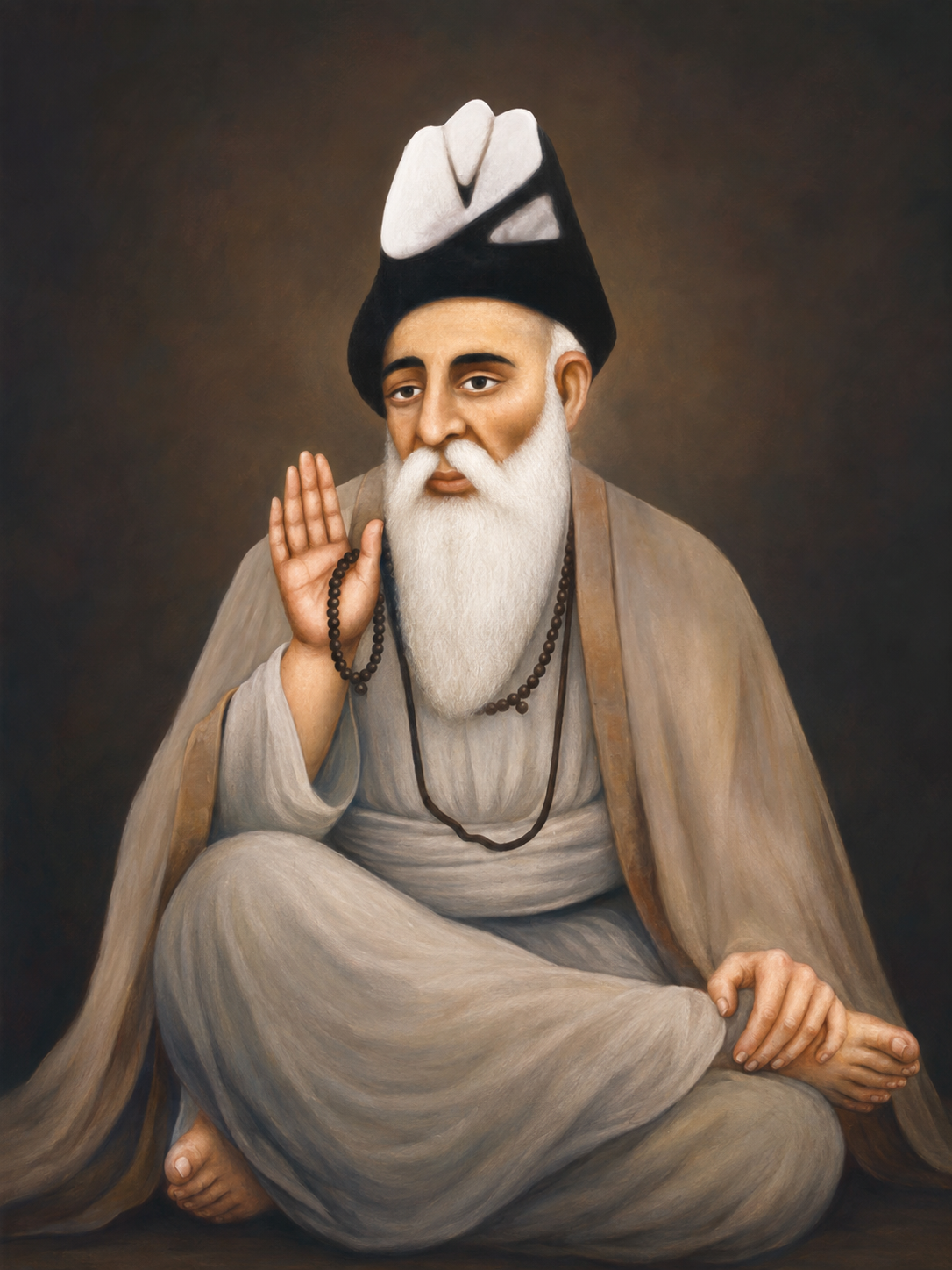
Every great sanctuary begins with a single step of faith. For Samadha Ashram, that step was taken nearly three centuries ago by a divine soul seeking a quiet place for communion with the Almighty. This is the story of Satguru Baba Har Bhajan Sahib, the sacred beginnings of the Ashram, and a legacy of grace that continues to welcome everyone today.
Incarnating in 1733 in the vibrant, spiritual city of Amritsar, Baba Har Bhajan Sahib possessed a deeply contemplative soul from his earliest years. While the world bustled around him, he was naturally drawn to the peaceful lives of saints and Sufis. In his youth, he embraced a life of renunciation, serving at local religious sites and traveling with enlightened companions like Baba Karmajus. From these early associations, a beautiful truth blossomed in his teachings: the Divine belongs to everyone.
In 1776, this search for quiet devotion led him far from Punjab. He traveled southwest toward the sweeping landscapes of the Indus River, passing through Sukkur and Rohri until he reached Shikarpur in Sindh.
At that time, Sindh was under the rule of the Kalhora dynasty, and Shikarpur was a flourishing, crowded hub of global trade. Merchants from Afghanistan, Central Asia, and Punjab filled its busy streets. Yet, Baba Sahib sought neither wealth nor worldly attention. He walked past the grand markets and chose the most secluded place he could find: a quiet cremation ground on the edge of the city. There, in profound silence, the spiritual seeds of Samadha Ashram were planted.
Gradually, the solitary cremation ground was transformed by his presence. Baba Sahib lived a disciplined life of deep meditation, selfless service (Seva), and the constant chanting of the Divine Name (Naam). He ignited a sacred fire, known as the Dhuni, which radiated both physical warmth and spiritual light.
Word of his divine grace spread. Families, weary travelers, and spiritual seekers began to seek his darshan (blessed presence). Baba Sahib welcomed every single soul who approached him. It did not matter whether they were rich or poor, or which community they belonged to—in his presence, everyone was embraced with equal dignity.
The true heart of the Ashram’s culture is perfectly captured in a beloved account passed down through the generations of the Sangat.
During one bitterly cold winter, a wealthy carpet merchant named Seth Dawood came to seek the Satguru’s blessing. Out of deep reverence, the merchant offered him a beautifully woven, highly valuable carpet to protect his physical vessel from the cold.
Moments later, Baba Sahib noticed a mother dog and her newborn puppies huddled nearby, shivering helplessly in the freezing wind. Without a second thought, the Satguru instructed that the luxurious new carpet be wrapped around the animals to shelter them.
This profound act of compassion became a guiding light for the Ashram, imparting a timeless lesson to the Sangat: true devotion is found in selfless kindness, and practical mercy for vulnerable creatures holds far greater spiritual weight than grand ceremonial offerings.
As the Sangat grew, devotees built a modest dwelling for Baba Sain near his beloved Dhuni. Among the many who came to offer their Seva was a young disciple named Ramoo.
Ramoo sought neither recognition nor position. He found his profound spiritual joy in the quiet background of the Ashram. He tended to the gardens, prepared simple meals, greeted weary travelers, and carefully preserved his Master’s teachings. Through years of sweeping the floors and serving the Sangat with absolute humility, Ramoo’s heart became a flawless mirror of his Satguru’s love.
As the time approached for him to consciously withdraw his life force and merge with the Divine, Baba Har Bhajan Sahib gathered his devoted followers. He turned to the young disciple who had served so quietly and faithfully.
He bestowed upon him the name Baba Ram Bhajan Sahib and appointed him as the Second Patshahi (spiritual successor) of Samadha Ashram. The sacred responsibility of the Ashram was passed not to the wealthiest follower, but to the most humble.
Seeing the deep grief in his followers’ eyes, Baba Sahib offered a divine promise that continues to anchor the Sangat today:
“Why do you grieve? The sacred Dhuni will remain here. Whoever approaches with faith and a sincere heart will find peace and blessings. My presence will continue through the Dhuni and the prayers of the Sangat.”
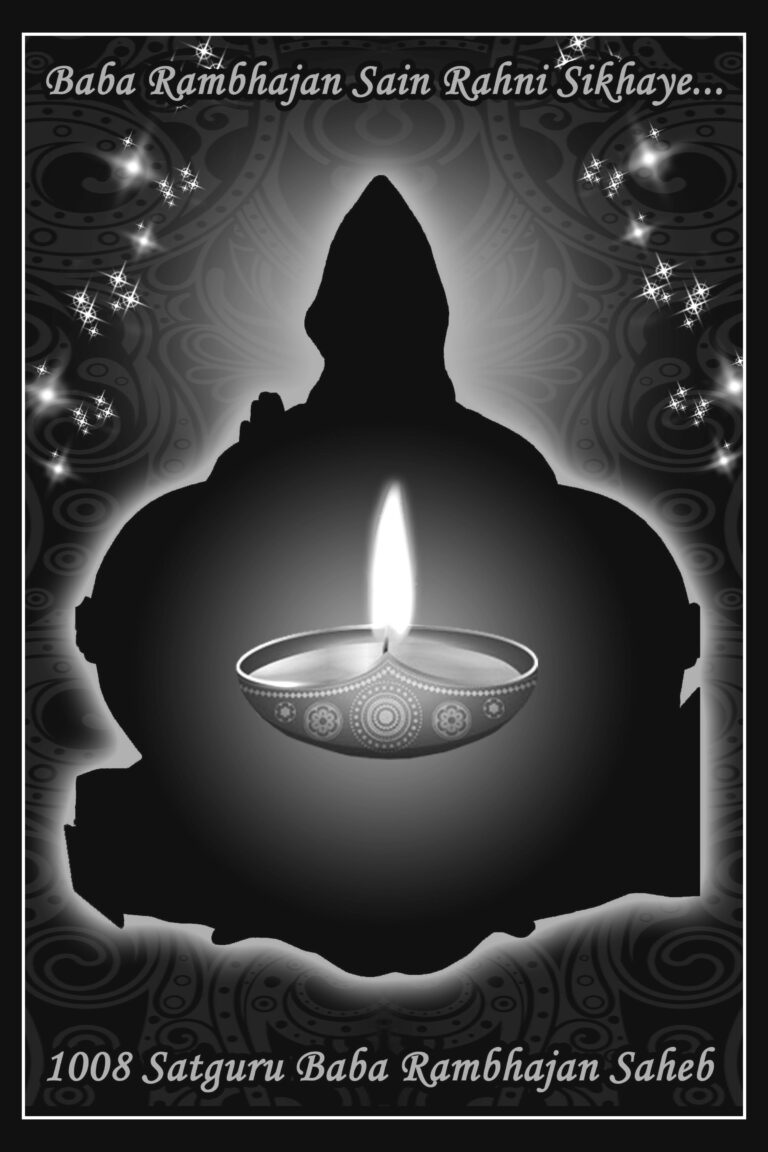
On the auspicious day of Ekadashi in 1853, Satguru Baba Har Bhajan Sahib consciously cast off his physical garment and entered Maha Samadhi.
As preparations for his sacred ceremonies began, a natural disagreement arose among the devotees. Because he was so deeply revered across various communities, some wished to perform cremation according to their customs, while others favored burial in accordance with theirs.
According to the cherished devotional memory of the Sangat, a wondrous event occurred to settle their hearts. As Baba Sahib’s sacred vessel was carried from the Ashram on a wooden bier, the bearers suddenly felt the weight vanish. Looking closely, they found that his physical frame was no longer there. Deeply astonished, the devotees rushed back to the Ashram. There, resting peacefully at his sacred place of meditation, they found his form once again.
For the Ashram community, this extraordinary event holds a clear, final teaching: A true Satguru cannot be divided by worldly rituals or confined to a single community. Baba Har Bhajan Sahib belonged to the Divine and to all of humanity. Today, his legacy of unconditional love, compassion, and unity continues to burn brightly at Samadha Ashram.
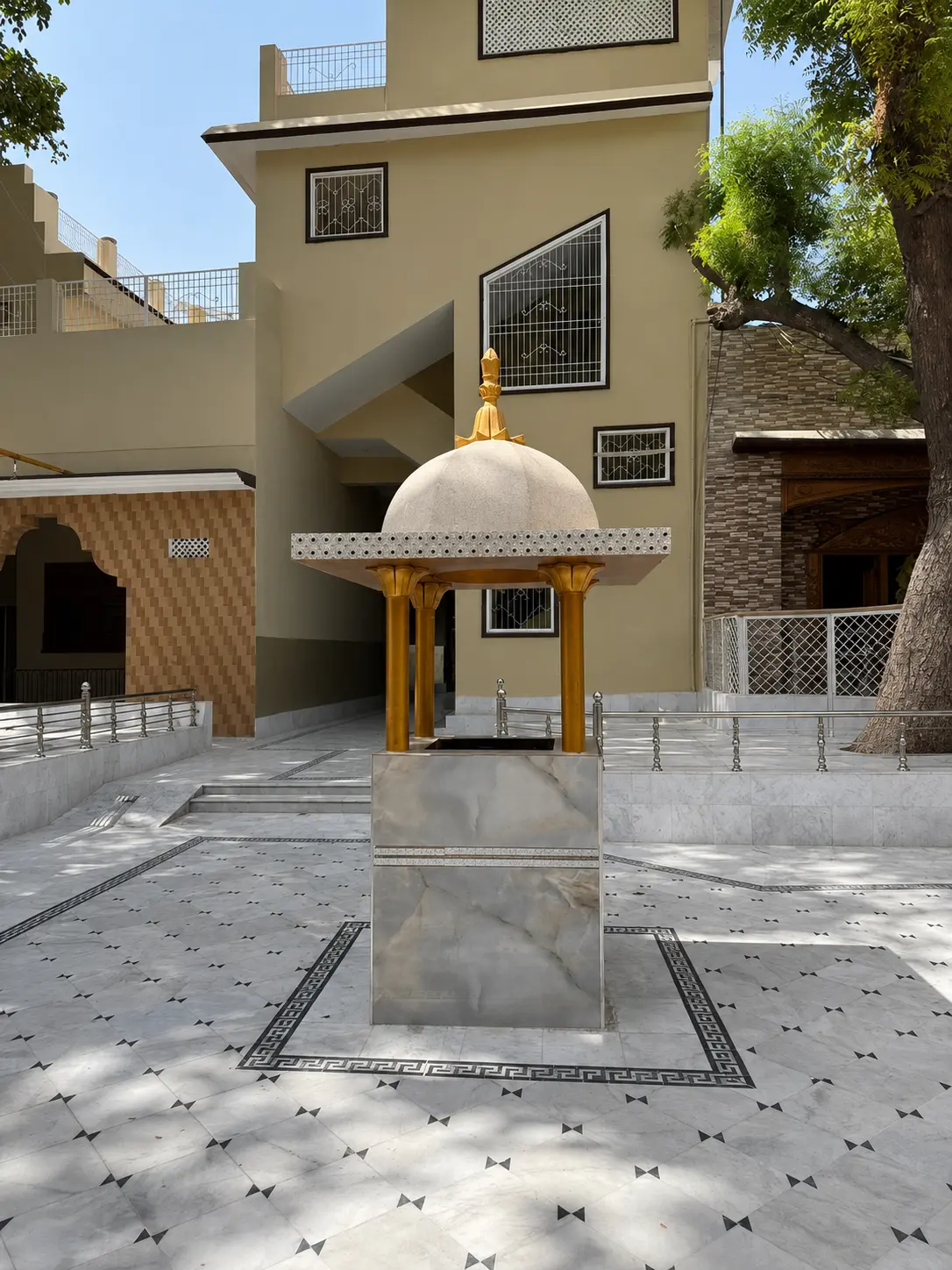
Nearly three centuries later, the sacred fire ignited by Satguru Baba Har Bhajan Sahib continues to burn brightly at the very heart of Samadha Ashram. True to his divine promise, the Dhuni Sahib remains a living testament to his eternal presence and grace.
Tended to day and night with deep reverence by the Sevadars, the holy flame has never been extinguished. Today, just as they did in the 18th century, seekers, families, and devotees from all walks of life gather around its warm, comforting glow. They come carrying their worldly burdens, their silent prayers, and their hopes.
When visitors sit before the Dhuni Sahib today, they experience the exact same peace, equality, and boundless compassion that drew those first weary travelers to Shikarpur. The sacred ashes (Bhaboot) from the Dhuni are taken home by devotees as a divine blessing, believed to carry immense spiritual healing.
The Dhuni Sahib is not simply a fire; it is the spiritual heartbeat of the Ashram. It stands as a beautiful, glowing reminder that while physical forms may merge with the Divine, true love, practical mercy, and the light of a Satguru never fade. The doors remain open, the fire remains lit, and the grace of Samadha Ashram continues to welcome all.
THE SACRED LINEAGE

For IOS and IPAD browsers, Install PWA using add to home screen in ios safari browser or add to dock option in macos safari browser